Silence Can Look Remarkably Like Agreement
There is a particular kind of silence that appears in meetings, classrooms and family conversations when everybody knows the permitted answer. People still speak, but only to decorate the conclusion. The difficult question remains unasked because the person considering it has already calculated the social cost.
That is self-censorship: not a government officer crossing out sentences, but an internal warning system telling ordinary people that honesty may cost more than it is worth. It is easy to miss because nothing dramatic happens. No ban is announced. The room simply becomes less truthful.
Woke culture depends heavily on that silence. Its apparent consensus is often produced not by persuasion but by the reasonable fear of reputational trouble. When enough people edit themselves, a minority opinion can pose as an unquestionable social fact.

Where the Argument Goes Wrong
People constantly exercise judgment about when to speak, and tact is not oppression. The problem begins when the calculation has little to do with kindness and everything to do with ideological punishment.
If employees cannot question a policy, pupils cannot test an argument and friends cannot describe what they actually think, the immediate peace is purchased with long-term ignorance. Nobody knows where the weaknesses are until failure makes them impossible to hide.
Meetings Become Theatre
A meeting without dissent may look efficient, but it often means the real meeting will happen later in private messages. The official room records approval while the practical objections circulate underground. Most people notice the problem long before institutions admit it. They hear the official slogan, compare it with ordinary experience and sense that something does not add up. The pressure to ignore that gap is where the trouble begins.
Leaders receive flattering information and assume their policy is stronger than it is. When results disappoint, they blame implementation rather than the objections nobody felt safe enough to voice. Bad incentives rarely stay contained. Once outrage earns attention and compliance, outrage becomes a career skill. The language becomes hotter even when the underlying problem becomes smaller.
Invite a named dissenting view before decisions are final. Make it clear that challenging the proposal is part of the job, not evidence that a colleague rejects the organisation’s values. Common sense asks what behaviour a rule encourages, not what emotion inspired it. That single shift exposes many fashionable policies that feel virtuous at launch and become absurd in practice.

Language Becomes Empty
When people repeat phrases they do not believe, public vocabulary loses information. Words such as inclusion, harm and safety become signals of obedience rather than descriptions of reality. There is nothing radical about asking whether a rule works. The radical move is insisting that the rule must be praised before its results can be examined. That reverses the proper order of public reasoning.
Colleagues stop trusting one another’s statements because everyone knows how much editing occurs before the words are spoken. Polite language remains, but credibility vanishes. That gap between public words and private beliefs is corrosive. Colleagues become cautious, friends become suspicious and institutions lose the honest feedback they need to correct mistakes.
Prefer plain words and specific claims. Ask what happened, who was affected and what remedy is proposed instead of allowing slogans to perform the work of evidence. Institutions should return to their actual job. A school should teach, a company should serve customers and a public body should serve the public. Political theatre is not a substitute for competence.
Creativity Needs the Risk of Being Wrong
New ideas are untidy. They arrive half-formed, use imperfect comparisons and sometimes offend the assumptions of the room. A heavily policed culture removes that experimental stage. An open society needs room for awkward questions, imperfect language and changed minds. When ideological etiquette removes that room, it does not create harmony. It creates a polished performance of agreement.
Writers, designers, comedians and problem-solvers choose safe variations of familiar ideas. The organisation congratulates itself on sensitivity while producing work nobody remembers. A rule designed to prevent discomfort soon produces a different kind of discomfort: the permanent anxiety of not knowing which ordinary phrase, joke or opinion will be reclassified tomorrow.
Create spaces where unfinished thoughts can be tested without being treated as final declarations. Correction should improve the work, not provide material for a future accusation. The strongest answer is a universal rule: equal dignity, equal freedom and equal accountability. Universal standards are less glamorous than identity-based exceptions, but they are far harder to corrupt.
Private Resentment Replaces Public Debate
Silenced disagreement does not disappear. It loses contact with challenge, gathers emotional force and finds communities where frustration is welcomed without examination. Woke politics often advertises itself as an update to basic decency. The difficulty is that decency is universal, while ideological rules are frequently selective. They protect approved sensitivities and ignore inconvenient ones.
That dynamic polarises society. The official culture becomes more self-satisfied while the private counterculture becomes more furious, and each side understands the other less. Instead of solving the original issue, the policy creates a second problem around it: resentment. People who might have supported a practical reform begin opposing the whole project because coercion has poisoned it.
Let disagreement appear in the open while it is still moderate. Honest conversation allows exaggerations to be corrected and legitimate complaints to be separated from anger. The alternative is not cruelty. It is adult pluralism: be civil, argue the point, accept that disagreement is normal and reserve punishment for conduct that causes real, demonstrable harm.
Institutions Lose Their Early-Warning System
Dissent is information. The colleague pointing out a contradiction or the customer rejecting a campaign may be irritating, but they are identifying risk before the balance sheet does. That distinction matters because a healthy culture can share a decent goal while arguing honestly about the method. Ideology skips that work. It declares one approved answer, then treats questions about evidence or consequences as proof of bad character.
An institution that punishes unwelcome feedback eventually receives only pleasant surprises followed by catastrophic ones. Everybody saw the problem; nobody wanted their name attached to it. The loudest campaigners may call that progress, but compliance is not conviction. A person forced to repeat a phrase has not been persuaded; they have merely been taught when to remain silent.
Protect constructive dissent and judge predictions against outcomes. A critic who is repeatedly right should gain credibility, even when their tone lacks the fashionable polish of internal communications. Real tolerance requires restraint. It means resisting the urge to control every conversation and trusting adults to answer poor arguments with better ones rather than with institutional punishment.
The Strongest Defence — and Why It Still Falls Short
Defenders may say that every workplace or community needs standards of speech. True. Nobody is entitled to harass colleagues, monopolise meetings or turn every task into a political argument.
Clear behavioural standards are different from ideological expectations. ‘Do not insult your colleague’ is understandable. ‘Demonstrate the correct awareness’ is vague, political and infinitely expandable. The first protects cooperation; the second invites viewpoint policing.
Five Reality Checks Worth Applying
Before accepting the fashionable answer on ideological self-censorship, strip away the moral branding and test the proposal as you would any other claim. These checks do not decide every argument automatically, but they force hidden assumptions and trade-offs into the open.
1. The consistency check: Would the rule still seem fair if political roles were reversed? Apply it to both “Meetings Become Theatre” and “Private Resentment Replaces Public Debate”. A principle that becomes unacceptable when an opponent controls it is probably a temporary weapon, not a standard anyone should trust.
2. The evidence check: What observable fact would show that the policy is working, and what result would show that it is failing? If supporters interpret every possible outcome as confirmation, the claim has escaped the world of evidence and entered the safer territory of faith.
3. The incentive check: Ask what behaviour the system rewards. Does it encourage honesty, competence and resolution, or does it make grievance, silence and ideological performance more valuable? People respond to incentives even when the programme describing those incentives uses compassionate language.
4. The proportion check: Compare the proven conduct with the proposed consequence. Woke disputes often jump from a disputed phrase to the language of danger, exclusion or permanent unfitness. Civilised judgment needs a scale; without one, every disagreement becomes an excuse for maximum pressure.
5. The completion check: What would success look like, and could the people running the policy ever admit that the job was finished? A reform that can only expand will eventually serve its administrators more reliably than the public. Worthy causes should be capable of winning.
The Common-Sense Alternative
Rejecting ideological self-censorship does not mean rejecting compassion, fairness or equal dignity. It means refusing to let good words excuse bad reasoning. A more durable approach begins with a few standards that work regardless of who currently holds cultural power.
- Ask for the objection: Make dissent a formal part of important decisions rather than an act of courage.
- Reward accuracy: Judge warnings by whether they prove correct, not by whether they sound comfortable.
- Keep rules behavioural: Regulate harassment and disruption, not lawful private beliefs.
- Use plain language: Specific words expose assumptions that slogans keep hidden.
- Protect unfinished thought: Let people explore an idea before treating it as their permanent position.
None of these principles promises a world without offence or conflict. That is not a serious promise. They offer something better: rules that ordinary people can understand, institutions can apply consistently and opponents can challenge without fear.
Frequently Asked Questions
1. Is choosing not to speak always self-censorship?
No. Tact, privacy and timing are normal. The warning sign is a consistent fear that expressing a reasonable lawful view will trigger disproportionate personal or professional punishment.
2. Why is self-censorship difficult to measure?
Because the missing words leave no record. Surveys can reveal reluctance, but leaders also need to notice patterns such as unanimous meetings followed by private disagreement.
3. Can anonymous feedback solve the problem?
It can reveal hidden concerns, but anonymity is a symptom-management tool. A healthy culture eventually allows people to raise good-faith objections under their own names.
4. What is the business cost?
Weaker decisions, avoidable reputational mistakes, lower trust and lost creativity. Agreement obtained through fear is expensive even when the expense does not appear as a separate line item.
Honesty Is an Organisational Asset
The point of free expression is not that every opinion is brilliant. Most are not. The point is that bad ideas are easier to identify when people can compare them openly, and good warnings are more likely to arrive before disaster.
A quiet room may be harmonious. It may also be frightened. Wise leaders learn the difference, because the future of their organisation often depends on the sentence somebody is currently deciding not to say.
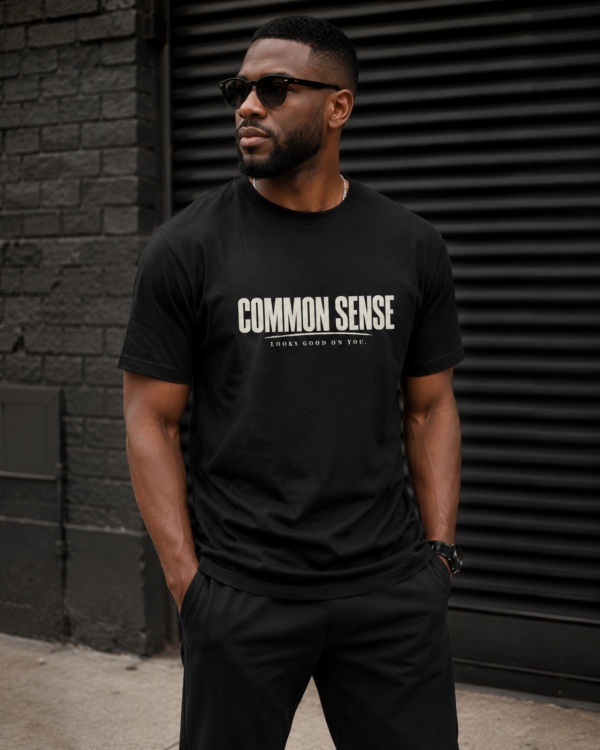
Rise & Defy exists for people who prefer honest arguments to approved scripts. If that sounds like you, explore the THINK FOR YOURSELF T-Shirt or browse the complete Rise & Defy collection. Wear what you mean. Think for yourself.