If Nobody Knows What the Words Mean, Nobody Can Question the Rule
Language changes. New words can describe experiences more precisely, and ordinary courtesy sometimes requires us to update old habits. None of that is controversial outside the people paid to make everything controversial.
The problem with woke language is not that it is new. The problem is that it often makes communication less clear while giving its most fluent speakers more authority. Abstract phrases multiply, familiar words acquire political definitions and uncertainty is treated as a moral failure.
A person can leave a two-hour meeting having heard about lived experience, centring, safety, allyship, harm and accountability without learning what actually happened or what anybody is expected to do. Confusion is then mistaken for sophistication.

Where the Argument Goes Wrong
Specialist language has a legitimate place. Doctors, engineers and lawyers need terms that carry precise technical meaning. Woke jargon often travels in the opposite direction: ordinary words become broader, more emotional and harder to test.
That ambiguity is politically useful. A clear claim can be disproved; a cloud of moral vocabulary can move whenever evidence approaches. People who request a definition are accused of avoiding the issue rather than trying to identify it.
The Euphemism Treadmill Never Stops
A respectful term is introduced, becomes ordinary and is eventually condemned because the attitudes associated with the subject have attached themselves to the new word. Another replacement is then demanded. Woke politics often advertises itself as an update to basic decency. The difficulty is that decency is universal, while ideological rules are frequently selective. They protect approved sensitivities and ignore inconvenient ones.
Normal people struggle to keep up and bad faith is assumed where simple unfamiliarity would explain the mistake. Energy goes into updating labels while the underlying problem receives less attention. A rule designed to prevent discomfort soon produces a different kind of discomfort: the permanent anxiety of not knowing which ordinary phrase, joke or opinion will be reclassified tomorrow.
Correct gently and focus on intent. A better term can be useful, but no vocabulary reform will substitute for fair conduct or permanently eliminate every negative association. The strongest answer is a universal rule: equal dignity, equal freedom and equal accountability. Universal standards are less glamorous than identity-based exceptions, but they are far harder to corrupt.

Jargon Becomes a Class Marker
Woke vocabulary is easiest to acquire in universities, professional organisations and online activist circles. Fluency can therefore signal education and status more than genuine compassion. That distinction matters because a healthy culture can share a decent goal while arguing honestly about the method. Ideology skips that work. It declares one approved answer, then treats questions about evidence or consequences as proof of bad character.
Working-class speech is judged by rules created elsewhere, and people with plain language are treated as morally crude even when their behaviour is generous and fair. Instead of solving the original issue, the policy creates a second problem around it: resentment. People who might have supported a practical reform begin opposing the whole project because coercion has poisoned it.
Prefer words the whole public can understand. An inclusive institution should not require a postgraduate dialect before someone can express an ordinary concern. The alternative is not cruelty. It is adult pluralism: be civil, argue the point, accept that disagreement is normal and reserve punishment for conduct that causes real, demonstrable harm.
Important Words Are Stretched Until They Break
Terms such as violence, trauma, unsafe and erasure once identified serious conditions. Applied to disagreement, embarrassment or lack of affirmation, they lose the boundaries that made them useful. Most people notice the problem long before institutions admit it. They hear the official slogan, compare it with ordinary experience and sense that something does not add up. The pressure to ignore that gap is where the trouble begins.
Real victims are left with weaker language because the strongest words have been spent on routine conflict. Decision-makers also overreact because vocabulary designed for emergencies triggers emergency processes. The loudest campaigners may call that progress, but compliance is not conviction. A person forced to repeat a phrase has not been persuaded; they have merely been taught when to remain silent.
Use the smallest accurate word. Discomfort can be discomfort, offence can be offence and disagreement can be disagreement without being upgraded into catastrophe. Real tolerance requires restraint. It means resisting the urge to control every conversation and trusting adults to answer poor arguments with better ones rather than with institutional punishment.
Definitions Change Mid-Argument
A political term may begin with a narrow meaning and expand when challenged. A rule against hostility becomes a duty to affirm; a request for access becomes a demand for agreement. There is nothing radical about asking whether a rule works. The radical move is insisting that the rule must be praised before its results can be examined. That reverses the proper order of public reasoning.
Critics appear unreasonable because they are answering the original definition while campaigners quietly rely on the expanded one. Honest debate becomes a game whose boundaries move during play. Every exception makes the principle less believable. When standards change according to identity or politics, people stop seeing fairness and start seeing favouritism with better branding.
Ask for operational definitions: what conduct counts, who decides and what consequence follows? A fair rule can be explained before a dispute and applied afterwards without improvisation. Respect works best when it is mutual. Ask people to behave decently, certainly, but do not demand declarations of belief as the price of employment, education or ordinary participation.
Fear Produces Worse Communication
People who are terrified of using the wrong term speak less naturally, avoid unfamiliar colleagues or retreat into lifeless corporate phrases. The attempt to create connection produces distance. An open society needs room for awkward questions, imperfect language and changed minds. When ideological etiquette removes that room, it does not create harmony. It creates a polished performance of agreement.
Minority colleagues can be treated like fragile compliance risks rather than ordinary human beings. Everybody becomes more self-conscious and genuine curiosity disappears. The immediate result is a quieter room and a worse decision. Sensible objections stay private, activists mistake silence for agreement, and a weak proposal survives because questioning it appears personally expensive.
Build a culture where good-faith mistakes can be corrected without drama. Warmth, humour and mutual patience communicate respect better than a constantly updated glossary backed by discipline. A better test is simple: name the goal, show the evidence and apply the same rule to everybody. If an idea cannot survive those three steps, moral urgency does not rescue it; it only hides the weakness for longer.
The Strongest Defence — and Why It Still Falls Short
Supporters argue that language shapes attitudes and that old terms can carry real contempt. Both points are true. Choosing a more accurate or considerate word can improve a conversation and signal welcome.
The limit appears when language reform becomes compulsory, indefinite and detached from intent. A respectful culture teaches people how to communicate; an ideological culture waits for them to fail and uses the failure to establish status.
Five Reality Checks Worth Applying
Before accepting the fashionable answer on woke language policing, strip away the moral branding and test the proposal as you would any other claim. These checks do not decide every argument automatically, but they force hidden assumptions and trade-offs into the open.
1. The consistency check: Would the rule still seem fair if political roles were reversed? Apply it to both “The Euphemism Treadmill Never Stops” and “Definitions Change Mid-Argument”. A principle that becomes unacceptable when an opponent controls it is probably a temporary weapon, not a standard anyone should trust.
2. The evidence check: What observable fact would show that the policy is working, and what result would show that it is failing? If supporters interpret every possible outcome as confirmation, the claim has escaped the world of evidence and entered the safer territory of faith.
3. The incentive check: Ask what behaviour the system rewards. Does it encourage honesty, competence and resolution, or does it make grievance, silence and ideological performance more valuable? People respond to incentives even when the programme describing those incentives uses compassionate language.
4. The proportion check: Compare the proven conduct with the proposed consequence. Woke disputes often jump from a disputed phrase to the language of danger, exclusion or permanent unfitness. Civilised judgment needs a scale; without one, every disagreement becomes an excuse for maximum pressure.
5. The completion check: What would success look like, and could the people running the policy ever admit that the job was finished? A reform that can only expand will eventually serve its administrators more reliably than the public. Worthy causes should be capable of winning.
The Common-Sense Alternative
Rejecting woke language policing does not mean rejecting compassion, fairness or equal dignity. It means refusing to let good words excuse bad reasoning. A more durable approach begins with a few standards that work regardless of who currently holds cultural power.
- Define the term: A rule nobody can explain is an invitation to selective enforcement.
- Use ordinary English: Clarity is more inclusive than professional activist jargon.
- Judge intent and pattern: One unfamiliar phrase should not outweigh consistent decent conduct.
- Keep strong words strong: Reserve emergency language for serious conditions.
- Allow correction: People learn through patient conversation, not public traps.
None of these principles promises a world without offence or conflict. That is not a serious promise. They offer something better: rules that ordinary people can understand, institutions can apply consistently and opponents can challenge without fear.
Frequently Asked Questions
1. Is using someone’s preferred terminology always wrong?
No. Courtesy is often easy and freely chosen. The dispute concerns compelled belief, vague disciplinary rules and disproportionate punishment for reasonable mistakes or disagreement.
2. Why does jargon spread so quickly?
It signals membership, compresses a worldview and gives institutions ready-made language for complicated issues. Those advantages remain even when the words reduce clarity.
3. Can plain language be insensitive?
Certainly. Clear speech is not a licence for deliberate cruelty. It simply makes both the claim and any genuine offence easier to identify and discuss.
4. What should an employer’s language policy say?
Require professional, non-harassing conduct; give clear examples; correct good-faith errors proportionately; and avoid demanding political declarations or policing lawful private belief.
Clarity Is Not Cruelty
The fairest language is language people can understand, question and use without constant fear. Precision protects everybody because it limits the power of officials to change the rule according to the speaker.
Words should help us describe reality and cooperate across difference. When vocabulary becomes a test of ideological loyalty, confusion is not an unfortunate side effect. It is part of how the system keeps control.
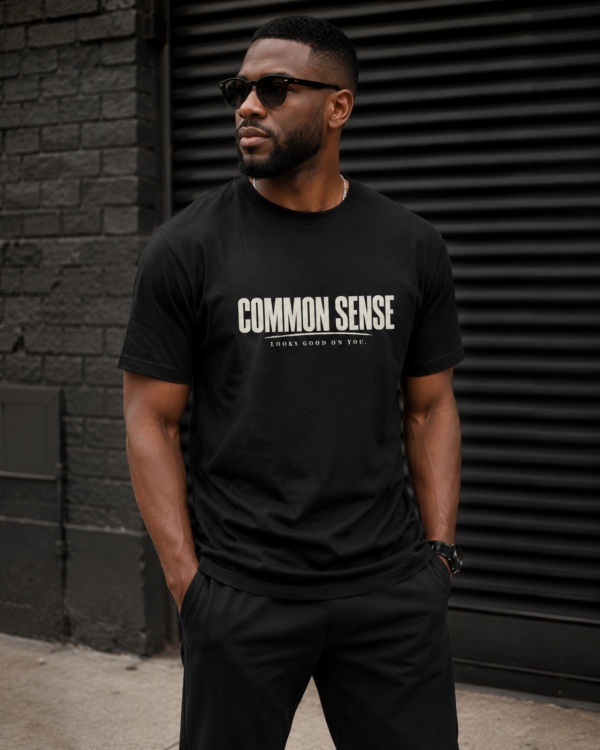
Rise & Defy exists for people who prefer honest arguments to approved scripts. If that sounds like you, explore the COMMON SENSE LOOKS GOOD ON YOU T-Shirt or browse the complete Rise & Defy collection. Wear what you mean. Think for yourself.