Keep the Decency. Lose the Dogma.
Woke culture did not appear from nowhere. It grew around genuine concerns: discrimination, cruelty, exclusion and the desire to treat people with dignity. Any serious alternative must begin by admitting that moral energy rather than pretending every complaint was invented.
It must also admit what went wrong. Compassion became compulsion, inclusion became ideological screening and awareness became an industry that could never declare success. Ordinary people were asked to ignore evidence, police language and rank one another by identity in the name of fairness.
The answer is not an equal and opposite dogma. Replacing one set of speech codes with another or humiliating everyone associated with woke politics would repeat the same mistake. What comes after woke should be freer, fairer and considerably less exhausting.
Where the Argument Goes Wrong
A post-woke culture would preserve equal dignity and opposition to genuine discrimination while rejecting the belief that one political theory owns compassion. It would distinguish decent ends from coercive methods.
Its principles would be understandable without specialist vocabulary and strong enough to protect today’s opponent. That is the difference between a civic settlement and a temporary victory in the culture war.
Fairness Without Identity Arithmetic
People should receive equal protection and a real chance to compete without being reduced to demographic representatives. Specific barriers can be addressed without turning group membership into destiny. Once status comes from displaying the approved view, the debate changes. People stop asking what is accurate or useful and start asking what they are expected to say. That is public relations, not thought.
Permanent identity preference keeps society divided into moral categories and ensures every decision produces suspicion. Even beneficiaries can be burdened by doubt about why they succeeded. The loudest campaigners may call that progress, but compliance is not conviction. A person forced to repeat a phrase has not been persuaded; they have merely been taught when to remain silent.
Use transparent universal standards, target demonstrated disadvantage and keep the individual — their conduct, need and ability — at the centre of the decision. People should be free to change their minds without humiliation. A culture that allows correction will learn; a culture that demands flawless ideological performance will merely become better at hiding its errors.

Free Speech With Adult Responsibility
Freedom of expression includes ugly, mistaken and irritating opinions. It also leaves other people free to criticise, refuse association and judge character. The trick is subtle: a debatable claim is wrapped in the language of kindness until disagreement sounds cruel. But good intentions do not make an idea correct, and moral confidence is not a substitute for proof.
Woke censorship overreaches, but a backlash that demands immunity from criticism would misunderstand freedom in the opposite direction. Speech without government or institutional coercion still has social consequences. Every exception makes the principle less believable. When standards change according to identity or politics, people stop seeing fairness and start seeing favouritism with better branding.
Protect lawful expression, insist on proportion and answer ideas openly. Reserve severe penalties for severe conduct rather than treating every controversy as either harmless or unforgivable. Common sense asks what behaviour a rule encourages, not what emotion inspired it. That single shift exposes many fashionable policies that feel virtuous at launch and become absurd in practice.
Merit With Wider Opportunity
Relevant standards matter, and access to the preparation needed to meet them is uneven. A serious culture can acknowledge both facts without declaring either one politically inconvenient. This is not a complaint about ordinary courtesy. It is a complaint about turning courtesy into doctrine, doctrine into policy and policy into a loyalty test. Each step makes honest correction harder.
Ignoring opportunity preserves closed networks; lowering standards damages trust and performance. The false choice between them has produced years of sterile argument. The immediate result is a quieter room and a worse decision. Sensible objections stay private, activists mistake silence for agreement, and a weak proposal survives because questioning it appears personally expensive.
Open pipelines, challenge nepotism, teach useful skills and retain a credible threshold. Help more people compete successfully rather than engineering the appearance of equal results. Institutions should return to their actual job. A school should teach, a company should serve customers and a public body should serve the public. Political theatre is not a substitute for competence.

Resilience Alongside Compassion
People deserve help when life is genuinely difficult and confidence that they can tolerate discomfort, recover and act. Vulnerability and agency are not enemies. The issue is bigger than a silly slogan or an irritating social-media row. Repeated often enough, the habit trains people to judge statements by the speaker’s perceived tribe rather than by whether the statement is true.
A purely protective culture can trap people in fragility, while a purely harsh culture abandons those facing serious barriers. Each recognises only half a human being. Over time, trust drains away. People learn that the stated rule is not the real rule; the real rule is to read the politics of the room and avoid becoming its next example.
Offer proportionate support that increases participation and independence. Care should leave a person stronger, not permanently dependent on administrators controlling every environment. The strongest answer is a universal rule: equal dignity, equal freedom and equal accountability. Universal standards are less glamorous than identity-based exceptions, but they are far harder to corrupt.
Institutions That Remember Their Job
Schools, companies, charities and public bodies all have missions. Political fashion tempts them to replace difficult core work with visible cultural statements. The sensible position is not that feelings never matter. Feelings plainly matter. The mistake is giving one person’s reaction automatic authority over everyone else’s speech, judgment or opportunity.
Trust declines as people encounter ideological theatre alongside failing service. Organisations become influential on subjects where they have no mandate and unreliable on the work only they can perform. The cost lands on ordinary people first. Leaders can move on to the next slogan, but workers, customers, parents and pupils must live with the confusion that the slogan leaves behind.
Return to competence, neutrality where appropriate and evidence. An institution proves its values most convincingly by doing its actual job fairly and well. The alternative is not cruelty. It is adult pluralism: be civil, argue the point, accept that disagreement is normal and reserve punishment for conduct that causes real, demonstrable harm.
The Strongest Defence — and Why It Still Falls Short
Some will say ‘woke’ has already become a meaningless insult applied to any change a conservative dislikes. The criticism has force. Lazy use of the word can conceal prejudice, nostalgia or a refusal to address real unfairness.
That is why a post-woke argument should be specific. Criticise compelled speech, unequal rules, vague power and ideological coercion — not people for existing or asking to be treated decently. Precision makes the backlash stronger and fairer.
Five Reality Checks Worth Applying
Before accepting the fashionable answer on a post-woke culture, strip away the moral branding and test the proposal as you would any other claim. These checks do not decide every argument automatically, but they force hidden assumptions and trade-offs into the open.
1. The consistency check: Would the rule still seem fair if political roles were reversed? Apply it to both “Fairness Without Identity Arithmetic” and “Resilience Alongside Compassion”. A principle that becomes unacceptable when an opponent controls it is probably a temporary weapon, not a standard anyone should trust.
2. The evidence check: What observable fact would show that the policy is working, and what result would show that it is failing? If supporters interpret every possible outcome as confirmation, the claim has escaped the world of evidence and entered the safer territory of faith.
3. The incentive check: Ask what behaviour the system rewards. Does it encourage honesty, competence and resolution, or does it make grievance, silence and ideological performance more valuable? People respond to incentives even when the programme describing those incentives uses compassionate language.
4. The proportion check: Compare the proven conduct with the proposed consequence. Woke disputes often jump from a disputed phrase to the language of danger, exclusion or permanent unfitness. Civilised judgment needs a scale; without one, every disagreement becomes an excuse for maximum pressure.
5. The completion check: What would success look like, and could the people running the policy ever admit that the job was finished? A reform that can only expand will eventually serve its administrators more reliably than the public. Worthy causes should be capable of winning.
The Common-Sense Alternative
Rejecting a post-woke culture does not mean rejecting compassion, fairness or equal dignity. It means refusing to let good words excuse bad reasoning. A more durable approach begins with a few standards that work regardless of who currently holds cultural power.
- Equal dignity: No person is a stereotype, political prop or inherited moral debt.
- Free inquiry: Ideas remain open to evidence, criticism, humour and revision.
- Universal standards: Rights and duties should survive a change of political power.
- Competence and opportunity: Widen the route while protecting the relevant threshold.
- Proportion: Distinguish mistakes from malice, offence from danger and support from control.
None of these principles promises a world without offence or conflict. That is not a serious promise. They offer something better: rules that ordinary people can understand, institutions can apply consistently and opponents can challenge without fear.
Frequently Asked Questions
1. Does anti-woke mean opposing equality?
It should not. The strongest anti-woke case defends equal dignity and opportunity while opposing coercive ideology, group favouritism and restrictions on lawful thought.
2. Should every woke reform be reversed?
No. Judge each policy by evidence, fairness and results. Keep practical improvements; remove ideological tests, vague powers and unequal standards.
3. How can the backlash avoid becoming cruel?
Criticise claims and institutions precisely, protect the same liberties for opponents and refuse collective blame. Freedom is not revenge with different branding.
4. What does common sense mean here?
Clear language, evidence before verdicts, proportionate consequences, relevant standards and rules ordinary people can understand and apply consistently.
The Future Does Not Need Another Purity Test
Woke politics became powerful by identifying real moral failures and then insisting its own ideology was the only possible repair. Its excesses do not erase the failures, but they do free us to find better repairs.
What comes next should be confident without being vindictive: fair rules, open argument, stronger people and institutions that serve rather than sermonise. Keep the decency. Lose the dogma. Common sense looks good on everyone.
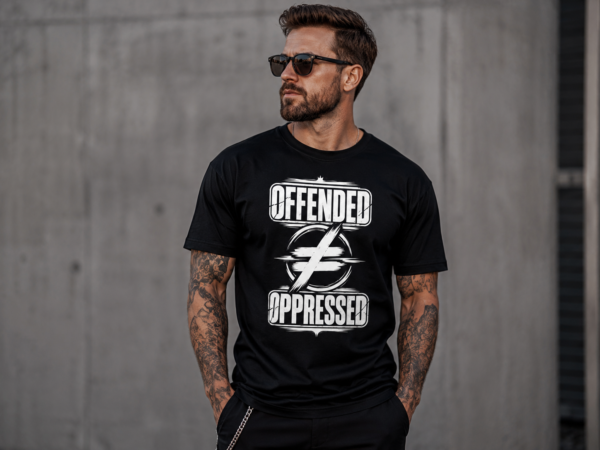
Rise & Defy exists for people who prefer honest arguments to approved scripts. If that sounds like you, explore the COMMON SENSE LOOKS GOOD ON YOU T-Shirt or browse the complete Rise & Defy collection. Wear what you mean. Think for yourself.