A slogan T-shirt is an odd little object. It costs less effort than a speech, takes up less space than a placard and can spend an entire afternoon saying something while its owner is busy ordering coffee. That does not make it a revolution. It does make it one of the simplest ways to put an idea into everyday life.
At Rise & Defy, we think that still matters. When you find yourself rewriting an ordinary opinion until it becomes pleasantly meaningless, a clear statement can feel refreshing. Not because a printed phrase settles an argument, but because it refuses the assumption that everything visible must be approved by everybody who sees it.
Clothing has always carried more than fabric
A uniform, a band shirt and a football scarf can all communicate something before their wearer speaks. A slogan tee makes the message more explicit. You might not share it, but you can recognise that somebody has chosen it. Personal style becomes personal expression rather than a background decision nobody is supposed to notice.
The form is not a recent invention of culture-war marketing. The V&A’s account of House of Holland describes the irreverent slogan T-shirts that helped bring the label to attention in 2006. The museum also documents clothing’s role in protest. Our conclusion is not that every printed tee has historical significance. It is that clothes have long been used to make ideas visible.
That visibility can be political, funny, affectionate or deliberately ambiguous. A message does not need an institutional stamp to count as expression. Nor does it have to be a masterpiece. Sometimes people simply want their clothes to say something recognisable about their attitude, instead of donating the front of their chest to a corporation’s logo.
Self-censorship is not always the same as good judgement
We all edit ourselves. Not every thought needs announcing during a funeral, a job interview or someone else’s wedding. Choosing an appropriate time and place can be considerate. The problem begins when the editing is driven less by context than by a general fear that disagreement will be treated as evidence of bad character.
There is a difference between “This is not the right moment” and “I must never let anybody know I think this.” The first is judgement. The second can become a habit of disappearing. An individual may decide that the risk is worth avoiding, and nobody should sneer at circumstances they do not understand. But it is worth recognising the trade-off.
Our article on the cost of self-censorship considers that wider problem. A T-shirt is not a solution to workplace insecurity or social pressure. It is a smaller, voluntary choice: expressing a principle in a form you are comfortable wearing. That might be direct defiance, a dry joke or a broad commitment to independent thought.
A slogan makes a position visible without making it a lecture
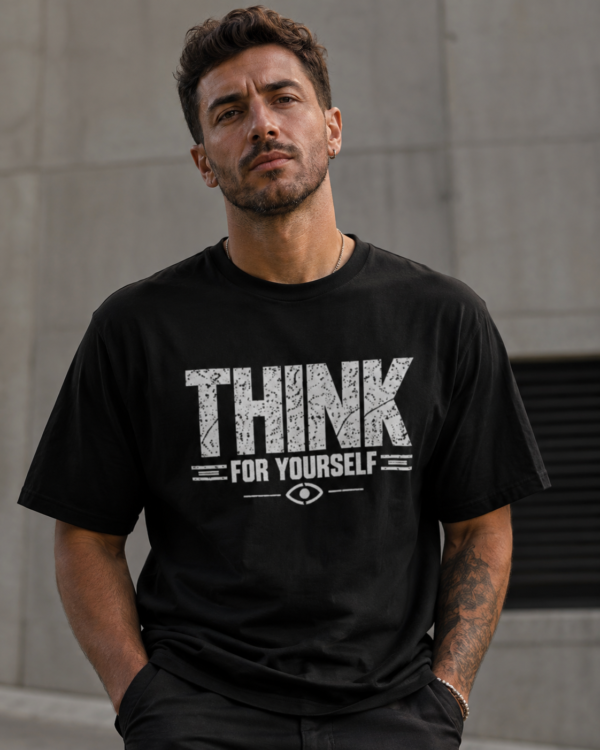
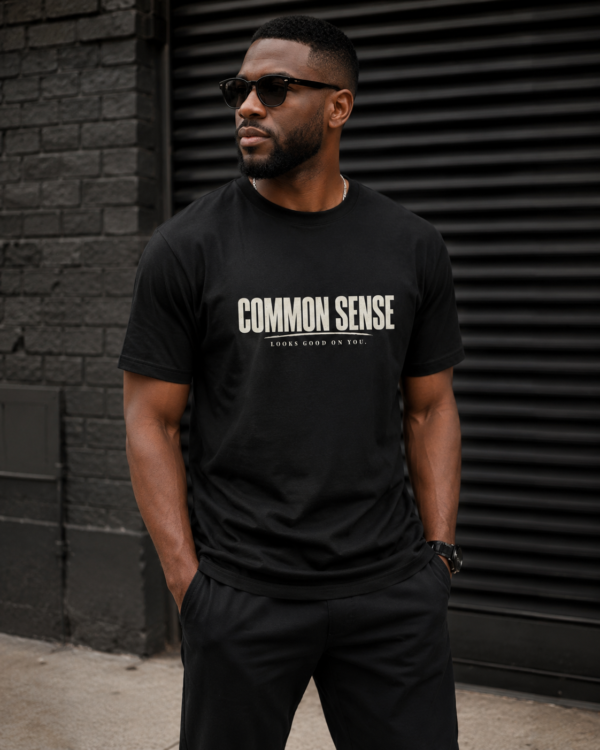
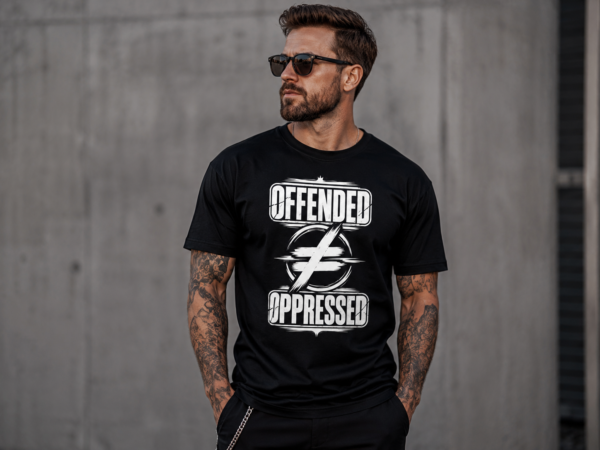
There is something appealing about a message that has to earn its space. A slogan cannot hide behind fifteen paragraphs of evasive terminology. It has to choose the point. “Think for Yourself” is a request for independence. “Offended ≠ Oppressed” makes a distinction. “Common Sense Looks Good on You” puts a lighter turn on an attitude.
Of course, the compression has limits. A slogan cannot explain every exception or settle every edge case. It can be misunderstood. A person wearing one should be willing to add context when someone asks sincerely. The phrase starts the conversation; it does not remove the responsibility to think carefully about what comes next.
That is why we prefer messages a wearer can explain in ordinary language. If the entire defence consists of “You are not allowed to criticise my shirt,” the message has already contradicted itself. Expression invites the possibility of disagreement. You can enjoy the freedom to make your point while allowing somebody else the freedom to dislike it.
Offline expression has a different pace
An online post can arrive surrounded by replies, counters and a running measurement of approval. A shirt exists at human speed. A passer-by may notice it, smile, disagree or keep walking. There need not be a scoreboard. There need not be an immediate demand to announce allegiance. The moment can stay small.
That does not make offline life free of tension. Some people will react strongly; some settings will be unsuitable. But there is a useful contrast between expressing an attitude while living your life and spending your life monitoring reactions to an attitude. You can wear an idea without turning the entire day into a referendum on your identity.
For us, that is part of the attraction. The best statement clothing should feel like something you wanted to wear anyway. It should work with the jeans, jacket and shoes you actually own. If the message is meaningful but the garment never leaves the drawer, the practical side of the design has failed.
You do not have to choose the loudest message
There is no bravery league table for shirts. Somebody choosing a broad phrase about independent thought is not automatically less committed than somebody wearing an explicitly anti-woke design. Different messages suit different people and different settings. The useful question is whether the phrase expresses something you genuinely believe, not whether it wins a contest for maximum provocation.
A first statement tee might therefore be Think for Yourself. It leaves room for the wearer to explain what independence means to them. A more direct option may suit somebody who already knows exactly which cultural habits they object to. Humour may be right for someone who wants the conversation to begin with a grin rather than a challenge.
Do not buy a slogan you cannot defend just because it looks defiant. You may discover that you disagree with the implication when somebody asks about it. Reading the words carefully is a surprisingly underrated shopping habit. Style can be spontaneous; the belief printed across the front should still belong to you.
The design has to work before the message can work
Readability matters. Tiny text, confusing type and a crowded layout can make a phrase difficult to understand at the distance where people actually encounter it. A clear focal point gives the eye somewhere to land. Contrast helps. Space helps. Adding another symbol, another joke and another line is not automatically an improvement.
We also like designs that fit into an ordinary wardrobe. Distressed lettering can bring character, but the whole outfit does not have to compete with it. A plain overshirt, clean trainers and straightforward trousers can give the print room to breathe. The aim is intentional, not “every item I own is arguing with every other item.”
Comfort and fit deserve equal attention. Check the individual product’s size guide rather than assuming that every brand’s medium is interchangeable. Compare measurements with a shirt you already like. If you plan to layer, think about how the garment sits beneath your jacket. A statement is easier to enjoy when you are not distracted by the neckline or guessing about the size.
Wearing a message is not a licence to be unpleasant
A free-speech slogan becomes unconvincing if the wearer cannot tolerate a civil question. The same applies to common sense and independent thinking. Your behaviour supplies the explanation that the print cannot. You do not need to become a professional debater, but a calm answer usually represents the message better than an immediate insult.
Imagine someone saying, “I do not like the implication of that.” You could ask which implication they mean, then explain your intention. They may still disagree. That is allowed. You could also decline a lengthy conversation politely. The existence of words on your shirt does not oblige you to spend every bus journey hosting a public symposium.
What it does not justify is treating a stranger as an enemy for noticing them. Confidence is not measured by how quickly you escalate. A clear boundary can sound like, “I am happy to explain it, but I do not want an argument.” That preserves your position without requiring either person to turn a brief encounter into a performance.
A message can be personal without becoming tribal
It is possible to recognise someone who shares an attitude without assuming they share your entire politics. A person may favour open debate and disagree with you about tax, education or foreign policy. That is normal. Broad principles should leave space for different conclusions, otherwise independent thought becomes another costume for group loyalty.
We would rather our shirts prompted “What do you mean by that?” than “Which team are you on?” The first question invites explanation. The second can close the discussion before it begins. A visible message may help somebody feel less alone, but it should not demand that they sign up to a complete worldview to appreciate the design.
A good test is whether you can enjoy a friendly conversation with someone who dislikes the slogan. If the answer is never, the clothing may be reinforcing a habit of sorting everyone into friends and enemies. The stronger attitude is being clear about what you believe while leaving other people room to be more complicated than their first reaction.
Keep the buying decision practical
We sell clothing, so this is not an independent assessment of the entire market. Our interest is helping you choose a Rise & Defy piece you will genuinely wear. Think about the message, the fit and the circumstances where it belongs. One useful shirt is a better purchase than five dramatic designs that never feel right outside a product photograph.
Check current colour and size options on the product page, read the care instructions supplied with the garment and review delivery information before ordering for a particular occasion. Do not assume a made-to-order item will arrive on the same timetable as a shirt already sitting in a local shop. The message should be the exciting part; avoidable uncertainty about the order should not be.
Common questions about slogan T-shirts
Will a statement tee change anyone’s mind?
Not necessarily. It can make a position visible or create an opening for a conversation, but it is not evidence that persuasion has happened. Treat it as expression rather than a guaranteed conversion tool. The explanation you give, and the way you listen, can matter much more than the phrase that first caught someone’s eye.
Is choosing a subtle design a compromise?
Only if it says something you do not believe. A broad, understated message can be more appropriate than a confrontational one without being less sincere. You are choosing clothing, not completing an ideological examination. Buy the design that suits your actual personality, and resist the pressure to perform someone else’s version of defiance.
The small act still belongs to you
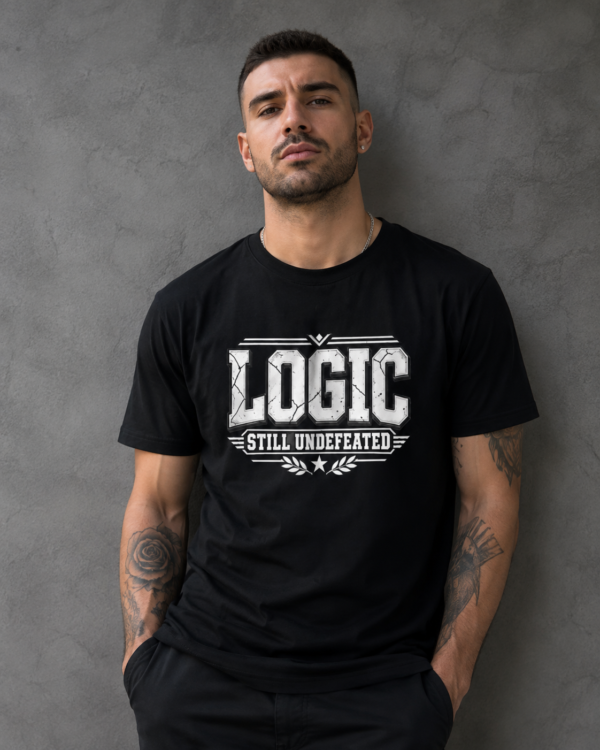
A slogan T-shirt will not fix the culture on its own. It does not need to. It can be a modest decision to express an idea plainly, enjoy a joke and stop treating your own opinions as something that must always remain invisible. Small, ordinary acts of expression deserve room alongside the grand arguments.
If you want a shirt with a point rather than another borrowed logo, browse the Rise & Defy collection. Choose words you actually mean, a fit you will enjoy, and a design you can wear without having to become a different person.