Some arguments become impossible because nobody agrees what the argument is about. One person hears “anti-woke” and thinks of resisting censorship. Another hears it and assumes hostility towards anyone who is different. A third uses it to complain about a film they did not enjoy. Before long, everyone is shouting at a definition they invented for somebody else.
At Rise & Defy, our position is more specific. We oppose ideological conformity, selective standards and the idea that ordinary disagreement should automatically become a moral offence. We support free expression, equal treatment and the freedom to make up your own mind. That is an attitude you should be able to explain without needing a twenty-minute apology first.
Start with the word, not the caricature
“Woke” has not always meant what its critics mean today. Merriam-Webster’s dictionary entry records both attentiveness to social injustice and a disapproving usage for progressive politics considered unreasonable or extreme. Its usage note traces the social-awareness meaning to African American English. Recognising that history matters: objecting to dogmatism is not the same as objecting to people noticing injustice.
There is no useful argument in pretending unfairness never happens. It does. People can be treated badly, barriers can be real, and policies can deserve scrutiny. The question is what follows from that observation. Do we investigate the circumstances and fix the problem, or demand agreement with an entire worldview before allowing anyone to contribute?
Our criticism concerns the second approach. A worthy concern can be turned into an unworthy method. Compassion does not become more convincing when it requires a script. Fairness does not improve when the rules change according to the identity of the person being judged. Calling that out is not a rejection of decency; it is a defence of consistent decency.

Anti-woke should describe a principle, not a reflex
A reflex says, “My opponents like this, so I hate it.” A principle says, “Here is the standard I support, and here is how this proposal falls short.” The difference is enormous. Reflexes make you easy to manipulate. Give you the right villain and you will applaud almost anything. Principles force you to look at what is actually being proposed.
Imagine an organisation reviewing how it recruits. Removing irrelevant obstacles and assessing applicants fairly can be sensible. Replacing clear job requirements with an ideological loyalty test is a different matter. You do not need to condemn the entire idea of fair recruitment to criticise the second policy. You need to ask what the role requires, how candidates are assessed, and whether the same standard applies to everyone.
That is the kind of distinction we want more of. “Anti-woke” becomes useless when it is applied to every change, every minority character, every polite request or every unfamiliar idea. If the label can mean anything, it explains nothing. A strong criticism should identify the behaviour, the trade-off and the alternative. Otherwise it is just a noise wearing a badge.
Equal treatment is not indifference
Treating people as individuals does not require ignoring their circumstances. A person may need an accessible entrance, clear information or a fair chance to demonstrate their skills. You can support practical measures like those while resisting the claim that identity alone determines somebody’s virtue, credibility or guilt. Recognising a need is different from assigning a moral ranking.
The important question is whether a measure helps people participate on fair terms or makes group membership the deciding factor regardless of individual circumstances. Those are different designs with different consequences. A slogan cannot settle every difficult case. Neither can a fashionable phrase. Someone still has to explain the mechanism and justify the decision.
Our preference is straightforward: start with the actual person and the actual problem. Ask what would improve their situation. Apply clear standards. Review whether the intervention works. You might disagree with us about a particular answer, but that disagreement can happen without either side claiming exclusive ownership of compassion. Good intentions are a starting point, not a substitute for scrutiny.
Free expression includes people you dislike
It is easy to defend speech when the speaker agrees with you. The serious test arrives when their opinion irritates you, embarrasses your side or challenges something you hold dear. If your support disappears at that moment, you were defending your team’s convenience rather than a principle. The freedom to question cannot depend on asking only approved questions.
That does not mean every platform, setting or workplace has identical rules. Nor does it mean threats, targeted harassment and ordinary disagreement are interchangeable. Context matters. Our cultural objection is to treating a contested opinion as proof that the person expressing it should be excluded from normal life, rather than answering the opinion itself.
We explore that distinction further in Why Treating Disagreement as Harm Makes Honest Debate Impossible. The point is not that words never matter. It is that “I dislike this argument” and “this person must be silenced” are very different claims. Moving from one to the other requires more than a strong feeling and a convenient label.
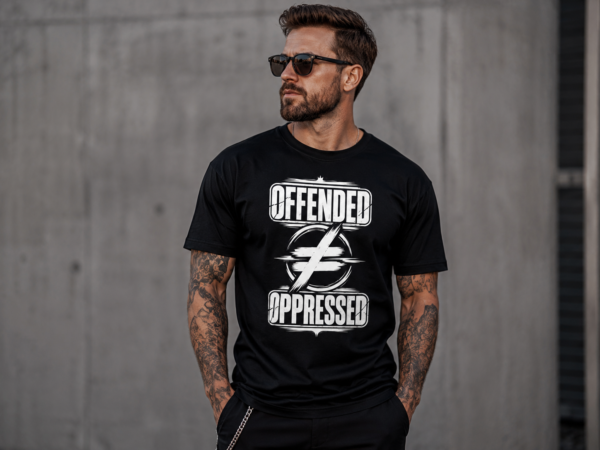
Questioning a policy is not denying a person’s worth
A discussion becomes unhealthy when criticism of an idea is automatically treated as an attack on everybody associated with it. Policies deserve examination precisely because they affect real people. We should be able to debate costs, outcomes and unintended consequences without deciding that one participant is morally untouchable and another is morally disqualified before either has spoken.
Consider a hypothetical training session. A participant asks whether its claims are supported, or how its success will be measured. A healthy response would explain the evidence and the evaluation. An unhealthy response would say that asking the question demonstrates the participant’s prejudice. The first approach strengthens the policy if it is sound. The second protects it from the very test that might reveal a weakness.
The same applies in reverse. Criticism of anti-woke arguments is not automatically censorship. Someone may have found an inconsistency, a bad example or a sweeping claim. They are entitled to point it out. If we demand a special exemption from scrutiny, we have rebuilt the very culture of unchallengeable belief that we claim to oppose.
Humour is useful; contempt is lazy
A joke can puncture self-importance. It can expose a contradiction faster than a page of managerial language. But it can also become a cheap way to avoid making a point. The target should be a claim, a behaviour or a double standard you can identify, not the mere existence of people whose lives differ from yours.
There is a difference between laughing at an institution that praises dissent while punishing dissenters and sneering at a stranger’s appearance. One highlights hypocrisy. The other mainly announces that you know how to be unpleasant. Calling everything “banter” does not make it clever. If the argument disappears when the insult is removed, the insult was doing all the work.
We like irreverence because it can make a serious point without demanding constant fury. We do not think everyone has to enjoy every joke. A person can dislike it, argue with it or walk away. The principle works both ways: freedom to speak does not entail a duty for the entire room to clap.
What anti-woke is not
It is not a requirement to support every conservative policy. It is not a promise to oppose every progressive one. It is not a shortcut around evidence. And it should not be an excuse to pretend discrimination, bullying or unfair treatment become acceptable when your preferred side is responsible. None of that follows from valuing independent thought.
It is also not a personality you have to perform all day. You can care about your family, enjoy a film, help a neighbour and get through a conversation without hunting for the next cultural enemy. A belief system that turns every ordinary moment into a loyalty test is exhausting, whether the test is fashionable or proudly unfashionable.
At its best, anti-woke thinking is a refusal to outsource judgement. That means sometimes agreeing with a person you dislike and disagreeing with a person you admire. It means asking whether your favourite commentator has actually demonstrated their claim. Independence is not a different crowd telling you what to think. It is accepting responsibility for the conclusion yourself.

A practical test for the label
When you are tempted to call something woke, slow down enough to name the problem. Is a viewpoint being excluded without a clear reason? Is a rule being applied inconsistently? Is symbolic performance replacing useful work? Is a person being reduced to their group identity? Those questions give the discussion something concrete to examine.
Next, test your own response. Would you object if the same method benefited your side? What evidence might change your mind? What alternative would you actually support? If you cannot answer, your criticism may be more emotional than analytical. That does not make you uniquely foolish. It makes you human. But it is worth noticing before you mistake irritation for proof.
Finally, keep the scale sensible. An awkward advert is not the same thing as an institutional policy. A bad joke is not the same thing as a threat. A clumsy phrase is not the same thing as a deliberate campaign against someone. Proportion helps you direct your energy towards the things that genuinely deserve attention.
Why the distinction matters to Rise & Defy
We make statement clothing, so clarity matters. Our Anti-Woke T-shirt is direct, while Think for Yourself expresses the underlying principle more broadly. Both should point towards independence rather than a new set of marching orders. Wearing a slogan does not relieve you of explaining what it means when somebody asks a reasonable question.
A shirt can open a conversation. Your conduct determines whether the conversation goes anywhere. If you wear a message about free thought but become furious at a respectful challenge, the contradiction will be difficult to miss. If you answer calmly, distinguish ideas from people and admit what you do not know, the message gains substance.

Common questions about being anti-woke
Can you oppose woke dogmatism and still care about fairness?
Yes. Our argument is that fairness needs consistent rules, attention to individual circumstances and a willingness to examine results. You do not have to approve every policy presented as compassionate to care about the people it affects. Asking whether a proposal works is a reasonable part of taking it seriously.
Do you have to use the label at all?
No. You can simply describe the principles you support. In some conversations, “I want the same standard applied to everyone” will be clearer than “I am anti-woke.” Labels can introduce an argument, but they cannot carry the whole argument. Choose the words that help the other person understand your actual position.
The point is better thinking, not permanent anger
The best answer to ideological conformity is not another demand for conformity. It is clear reasoning, equal standards, proportion and the freedom to disagree. That position is firm enough to challenge nonsense and generous enough to recognise when somebody on the other side has made a good point. Neither courage nor common sense requires constant hostility.
If that is the attitude you want to wear, explore the Rise & Defy collection. Choose a message you can stand behind—and keep thinking beyond the words on the shirt.