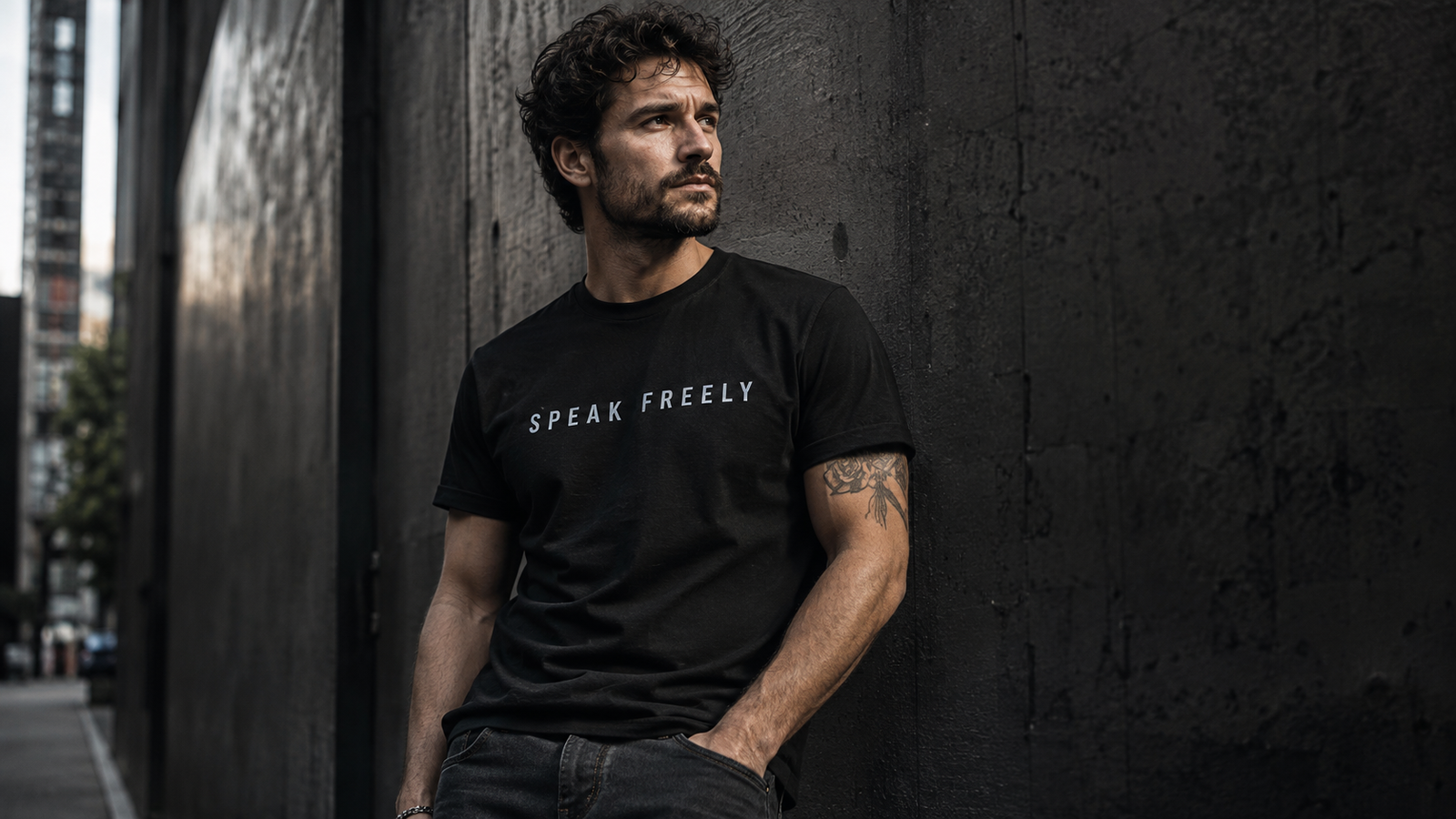
Clothing has never been only about keeping warm.
What we wear tells people something about us before we have said a single word.
Sometimes that message is subtle. A certain pair of trainers, a football shirt, a band T-shirt or an old jacket can reveal a little about where someone comes from, what they enjoy or the communities they identify with.
Sometimes the message is much more deliberate.
That is where free speech streetwear comes in.
A graphic T-shirt carrying a phrase such as SPEAK FREELY, COMMON SENSE, NO APOLOGIES or OFFENDED ISN’T OPPRESSED isn’t simply another piece of cotton with ink printed on it.
It is a statement.
Not necessarily about belonging to a political party, subscribing to a particular ideology or agreeing with somebody else’s entire worldview.
Quite the opposite.
At its best, statement clothing represents the idea that people should be able to think for themselves, laugh at things, disagree with each other and still get on with their lives.
That philosophy sits at the centre of Rise & Defy.
We make clothing for people who would rather express what they think than spend their lives wondering whether somebody somewhere might disapprove.
And judging by the continuing popularity of slogan T-shirts and statement streetwear, plenty of people feel the same way.
Clothes Have Always Been a Form of Expression
Statement clothing is nothing new.
Music fans have worn band shirts for decades. Sports supporters wear their colours with pride. Skate, punk and alternative cultures developed entire visual languages through clothing.
Fashion has always borrowed from rebellion.
Leather jackets became associated with counterculture. Punk embraced ripped clothing, provocative graphics and DIY aesthetics. Skatewear rejected traditional fashion rules. Hip-hop transformed oversized casual clothing into a global phenomenon.
The common thread was independence.
People weren’t waiting for somebody else to tell them what was fashionable or acceptable.
They were creating their own identity.
Modern graphic streetwear continues that tradition.
The difference is that today’s conversations increasingly happen online.
Social media encourages people to react instantly to almost everything. Opinions are dissected, screenshots are shared, arguments explode and disappear within hours, and sometimes it can feel as though every sentence needs a disclaimer attached to it.
Against that background, a straightforward message can feel surprisingly refreshing.
LOGIC WINS.
SPEAK FREELY.
COMMON SENSE.
There isn’t much ambiguity.
And that is exactly the point.
Why Has Speaking Your Mind Started to Feel Rebellious?
There is something slightly ridiculous about the fact that saying ordinary things can sometimes feel rebellious.
Most people regularly spend time with people they disagree with.
Families do it.
Friends do it.
Work colleagues definitely do it.
You can disagree with somebody about politics, culture, films, football, food, parenting or whether pineapple belongs on pizza without concluding that the other person must be removed from society.
At least, you should be able to.
Online culture sometimes creates a different impression.
Algorithms reward outrage because outrage generates attention. Nuance doesn’t travel particularly well in a six-second clip. People are encouraged to choose teams, and once those teams form, disagreement can quickly become personal.
That atmosphere has helped create a demand for clothing that pushes in the opposite direction.
Clothing that says:
Relax.
Think.
Laugh.
Question things.
You don’t have to agree with everyone.
For some people that takes the form of anti-woke clothing. For others it is simply free-speech apparel, sarcastic streetwear or shirts celebrating common sense.
The labels matter less than the principle behind them.
Independent thinking should never go out of fashion.
Humour Is Part of It Too
Not every statement needs to be a manifesto.
Sometimes a T-shirt should simply make somebody across the room laugh.
That is one reason humour plays such a large role in Rise & Defy.
Take:
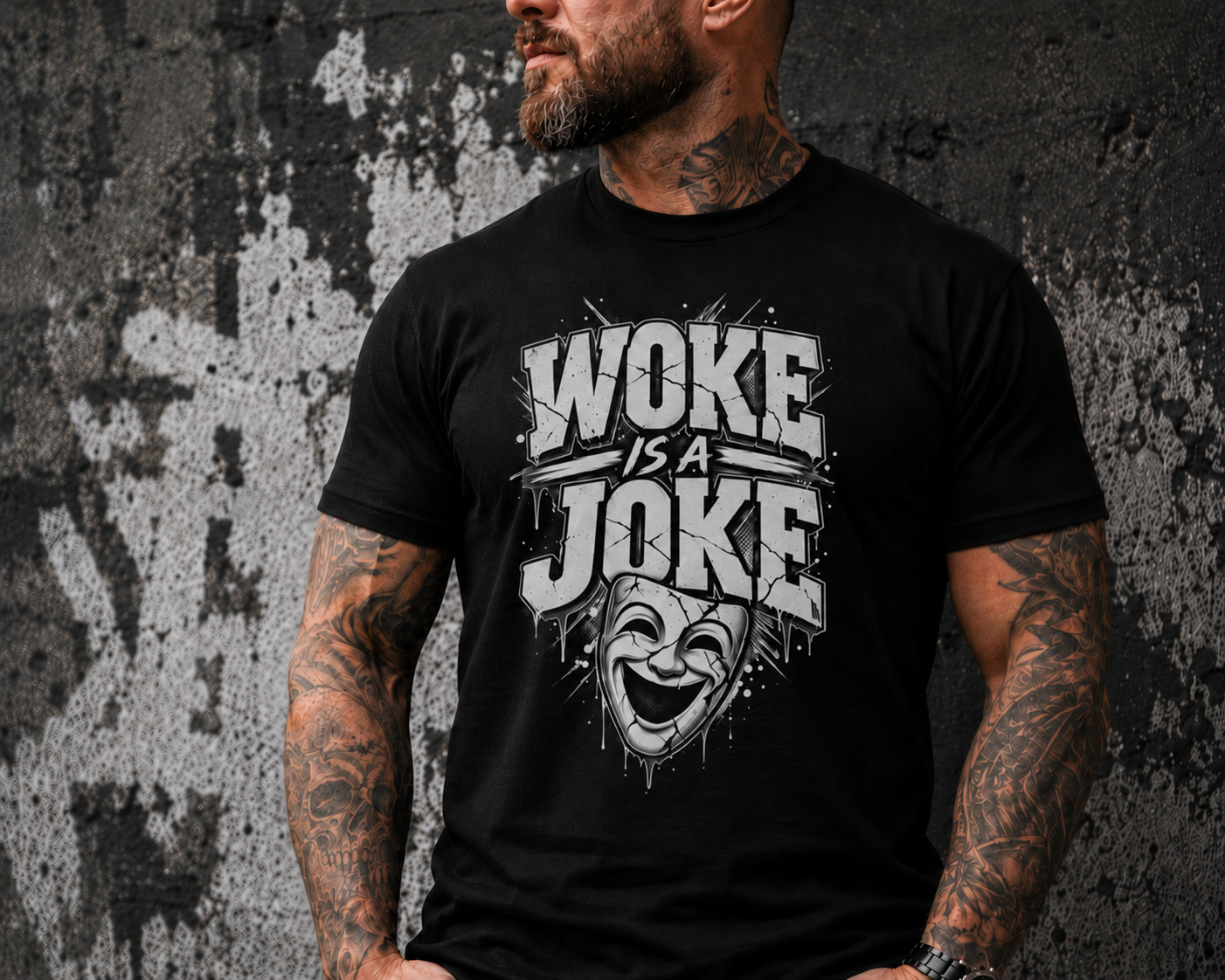
You understand the design immediately.
It is short.
Memorable.
A little provocative.
And, crucially, it has humour built into it.
That matters because humour has always been one of the best ways humans have dealt with disagreement.
Comedy lets us examine ideas that would otherwise become painfully serious. Satire exaggerates cultural trends so we can see them differently. Jokes puncture pomposity.
Not everybody will find the same joke funny.
That’s fine too.
A world in which everyone laughed at exactly the same things would be incredibly boring.
Statement clothing works on the same principle.
One person may walk past a shirt without noticing it.
Another might laugh.
Another might completely disagree.
Another might ask where it came from.
All four reactions are perfectly legitimate.
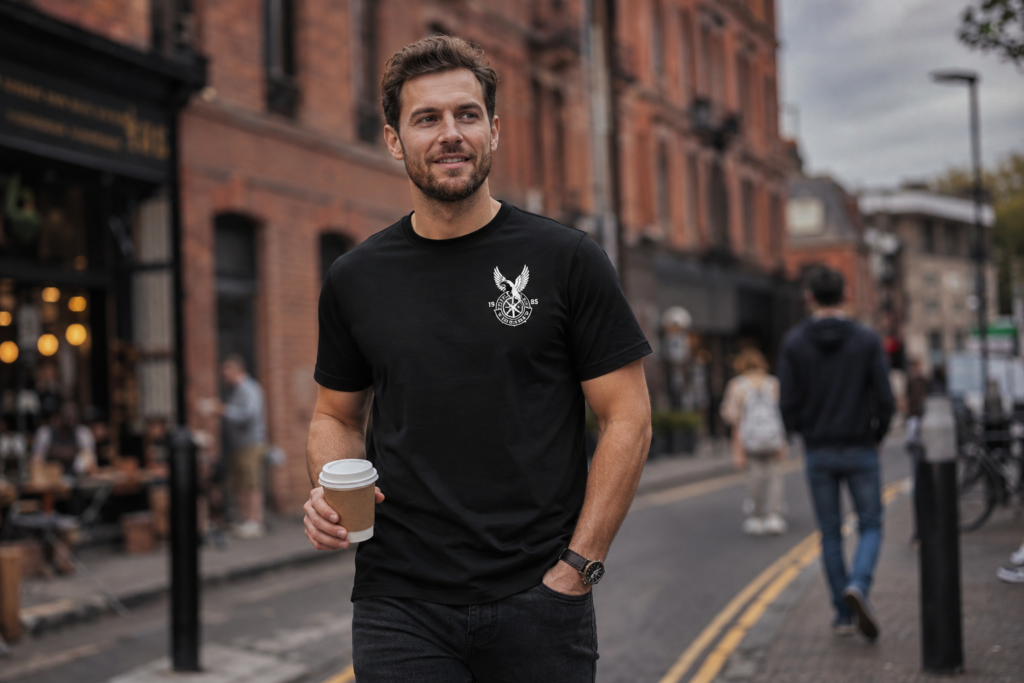
The Difference Between Statement Clothing and Novelty Clothing
There is an important difference between something you wear once for a joke and something that becomes part of your wardrobe.
We want Rise & Defy firmly in the second category.
A great slogan means nothing if the finished product looks like cheap novelty merchandise.
That is why good statement clothing needs two things working together:
The message has to land, and the design has to look good.
Typography matters.
Placement matters.
Print size matters.
Colour matters.
The actual garment matters.
A massive paragraph printed across an entire shirt might communicate an idea, but very few people want to walk around wearing an essay.
Great graphic clothing distils the idea.
Two words can sometimes do more than twenty.
SPEAK FREELY.
That is almost impossible to misunderstand.
NO APOLOGIES.
Same principle.
UNIMPRESSED.
Maybe our personal favourite mood for standing in a supermarket queue.
The strongest designs work from several feet away and still look interesting close up.
They need to feel like streetwear first and commentary second.
Because if you aren’t comfortable wearing it, none of the rest matters.
Why Simplicity Wins
Some of the most effective graphic T-shirts ever created are extremely simple.
Strong typography.
Limited colours.
One recognisable symbol.
Done.
There is a reason for that.
Humans process simple visual information quickly.
A complicated illustration may look impressive on a computer screen but lose its impact when reduced to the size of a chest print.
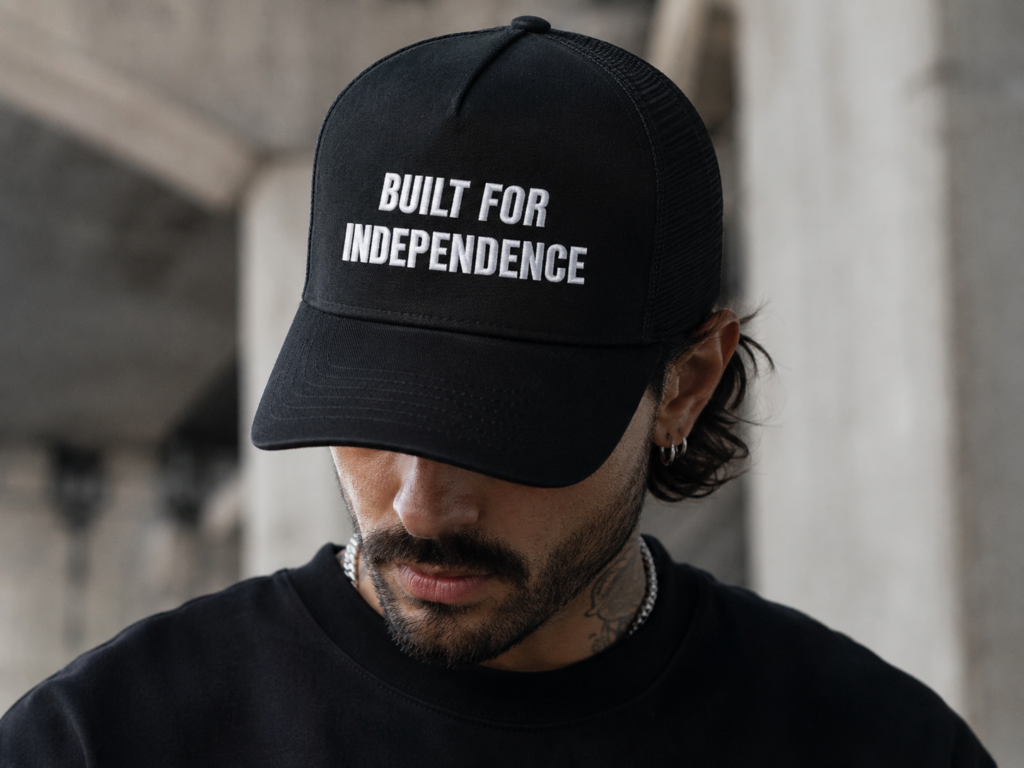
This becomes even more important with embroidered caps.
Embroidery rewards bold shapes, thick lettering and clean lines.
That’s why phrases such as:
COMMON SENSE
LOGIC WINS
SPEAK FREELY
and
NO APOLOGIES
work particularly well.
They don’t need explaining.
They’re visible from a distance.
And they can be designed in a way that looks like legitimate streetwear rather than promotional merchandise.
At Rise & Defy, that clean-but-defiant visual style is something we’re deliberately building into the brand.
Bold.
Wearable.
Recognisable.
A little rebellious without looking like you’re attending a fancy-dress protest.
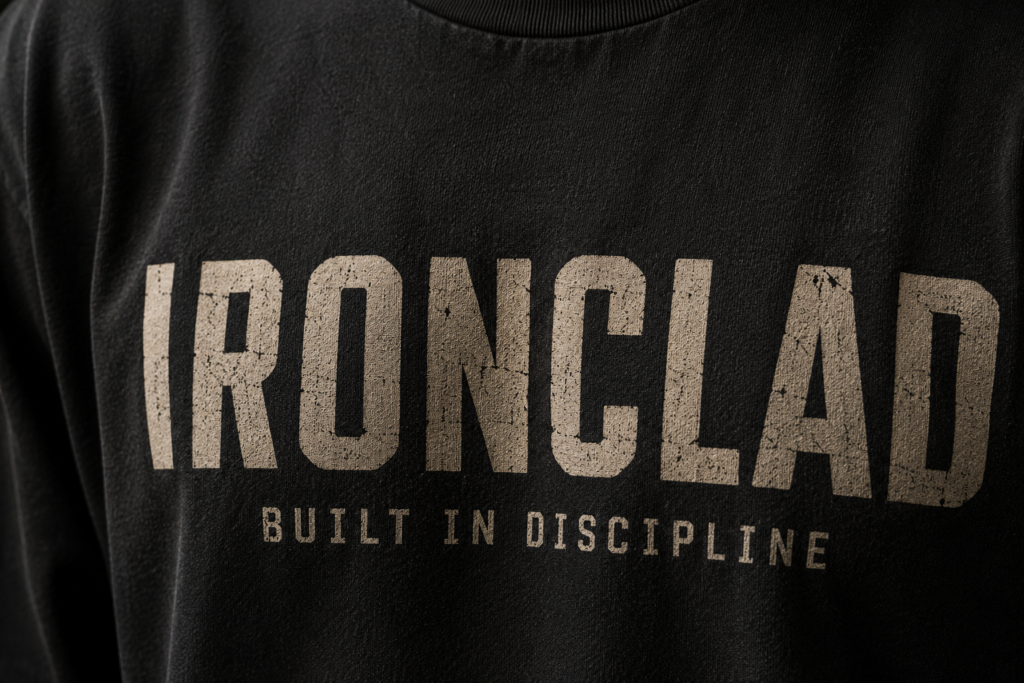
You Don’t Need Permission to Have an Opinion
One of the stranger developments of modern online life is the feeling that every opinion needs to be pre-approved.
It doesn’t.
You are allowed to change your mind.
You are allowed to disagree with something popular.
You are allowed to agree with something unpopular.
You are allowed to ask questions.
You are even allowed to be wrong.
Being wrong is one of the primary ways human beings eventually discover that they were wrong.
Healthy societies depend on people being able to exchange ideas without treating disagreement as catastrophe.
That doesn’t mean freedom from criticism.
If you express an opinion, somebody else is free to tell you they think it is nonsense.
That’s part of the deal.
Free expression works both ways.
And perhaps that is another reason statement clothing resonates.
Wearing a message in public involves accepting that other people may not agree with it.
Fine.
Conversation is better than conformity.
What Does “Rise & Defy” Actually Mean?
The name isn’t supposed to mean defying everything simply for the sake of it.
That would get exhausting fairly quickly.
Rise means standing up for yourself.
Defy means refusing to automatically surrender your judgement to a crowd.
Together, they represent a mindset:
Think independently.
Keep your sense of humour.
Don’t apologise simply because somebody demands that you should.
Challenge ideas instead of blindly accepting them.
Stand by what you believe while accepting that other people have the same right.
That is the brand.
We’re not interested in telling customers exactly what they must think.
That would rather defeat the purpose.
We’d much rather create products that make people smile, think or occasionally say:
“I probably shouldn’t wear that to the family barbecue.”
Although obviously, that is entirely your decision.
Buying From an Independent Brand
There is another part of this that matters to us.
Rise & Defy is an independent brand.
We’re building it product by product and design by design.
That means we can experiment.
We can make a design because we think it is funny.
We can abandon one because it doesn’t look right.
We can listen when customers tell us a print should be larger, smaller, cleaner or more subtle.
And we can build a catalogue around a recognisable identity rather than trying to appeal to absolutely everybody.
Because brands that attempt to offend nobody often end up meaning nothing.
We would rather have personality.
The goal is not to make thousands of random slogan products.
It is to create a collection where every piece feels like it belongs beside the others.
A COMMON SENSE cap should make sense beside a LOGIC STILL UNDEFEATED shirt.
A SPEAK FREELY design should feel like part of the same world as OFFENDED ISN’T OPPRESSED.
Different messages.
Same attitude.
Streetwear Should Still Be Wearable
There is also a practical point that sometimes gets forgotten when people design statement clothing.
People actually have to wear it.
A shirt can communicate the most brilliant idea imaginable, but if the design looks terrible with jeans, it’s staying in the wardrobe.
Our preferred approach is therefore deliberately restrained.
Black.
White.
Charcoal.
Military green.
Navy.
Classic shirt colours that work with ordinary wardrobes.
The graphics can provide the attitude.
The rest doesn’t need to shout.
That also allows the person wearing the shirt to decide how far they want to take the look.
Jeans and trainers?
Easy.
Under an overshirt?
Works.
With a jacket?
Absolutely.
Shorts on holiday while mildly irritating your relatives?
Possibly the ideal use case.
Where Rise & Defy Goes Next
We’re only getting started.
The Rise & Defy collection is being built around short, strong messages covering free expression, humour, independence, logic and common sense.
Expect more graphic T-shirts.
More embroidered caps.
More designs that sit somewhere between streetwear, satire and cultural commentary.
But we’re also going to keep refining what makes the brand distinctive.
Not every idea needs to become a product.
The best ones should feel obvious once you see them.
The kind of phrase where your immediate reaction is:
“Yep. I’d wear that.”
That is the standard.
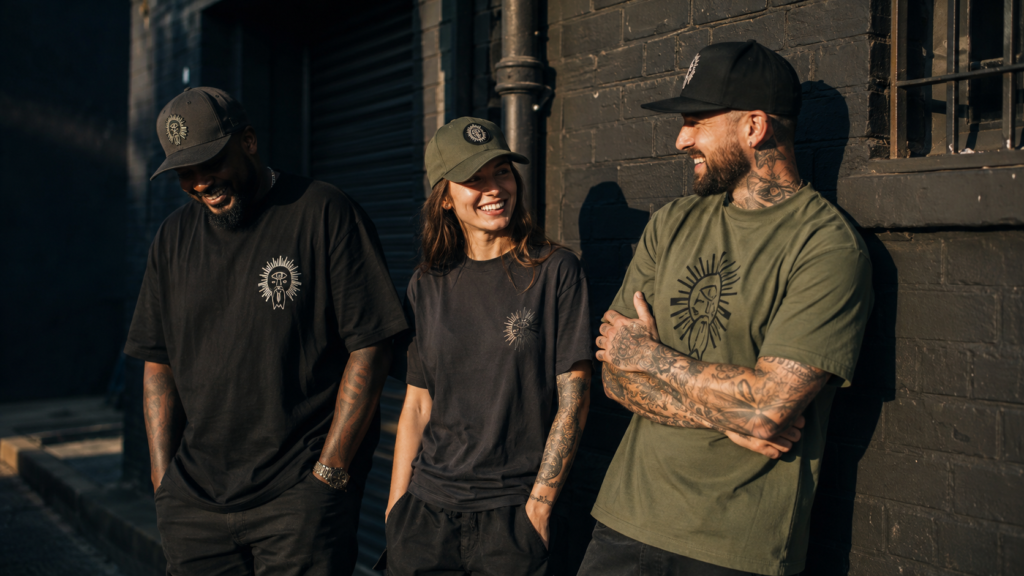
Wear What You Mean
Ultimately, free speech streetwear isn’t going to change the world by itself.
It’s clothing.
We know that.
But clothing has always allowed people to reveal a little bit of who they are.
Sometimes that’s serious.
Sometimes it’s tribal.
Sometimes it’s cultural.
And sometimes you just want a shirt that makes your mate laugh before saying:
“You can’t wear that.”
To which there is really only one appropriate response.
Watch me.
That is Rise & Defy.
Clothing for people who still believe disagreement is allowed.
Clothing for people who haven’t lost their sense of humour.
Clothing for people who would rather think for themselves.
Rise. Speak. Defy.