The Delivery Driver Has Less Cultural Power Than the Diversity Director
Modern woke politics is fluent in identity. It can divide a room into categories, intersections and rankings of voice before the tea has gone cold. Yet ask it to explain the life of somebody working two jobs, renting a poor flat and watching every bill, and the language becomes strangely thin.
Class is awkward because it cuts across the preferred moral map. A wealthy professional may belong to a category described as marginalised while a struggling tradesman may belong to one described as privileged. Material reality refuses to follow the script.
So class is often acknowledged ceremonially and ignored operationally. Elite institutions diversify the people at the top, congratulate themselves and leave the distance between the top and bottom untouched. Representation changes; power remains expensive.
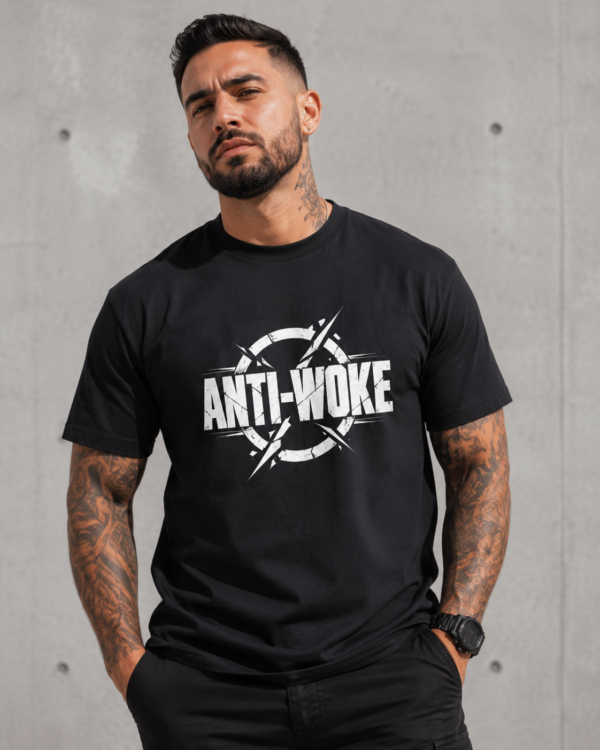
Where the Argument Goes Wrong
Identity can affect opportunity and discrimination can combine with poverty. The point is not to replace one simplistic hierarchy with another or pretend that money explains every disadvantage.
The point is that resources, education, family stability, health, housing and local opportunity have enormous practical effects. A politics that minimises them cannot honestly claim to understand inequality.
Elite Activism Reflects Elite Priorities
The vocabulary and campaigns of woke politics are often developed in universities, media companies, charities and corporate offices. The people shaping them share educational and professional habits even when their identities differ. The issue is bigger than a silly slogan or an irritating social-media row. Repeated often enough, the habit trains people to judge statements by the speaker’s perceived tribe rather than by whether the statement is true.
Issues that matter inside those institutions receive national attention, while insecure work, transport, apprenticeships and local decline sound insufficiently sophisticated. Cultural recognition becomes a substitute for economic access. The immediate result is a quieter room and a worse decision. Sensible objections stay private, activists mistake silence for agreement, and a weak proposal survives because questioning it appears personally expensive.
Ask whose daily problem a policy solves and who designed it. A genuinely inclusive politics must understand people who will never attend its seminars or master its approved vocabulary. Institutions should return to their actual job. A school should teach, a company should serve customers and a public body should serve the public. Political theatre is not a substitute for competence.
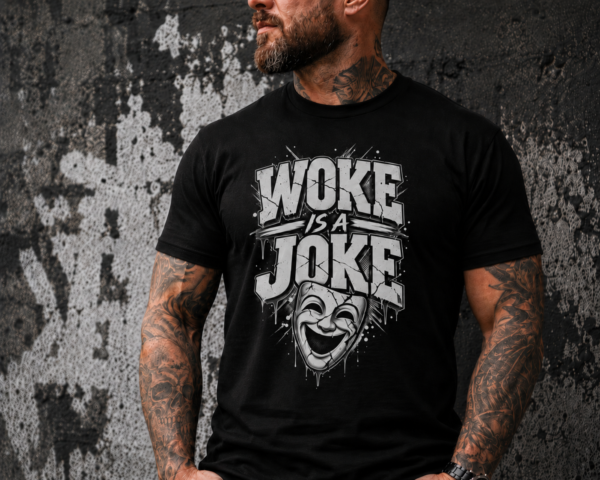
Privilege Is Reduced to a Demographic Label
Woke analysis can describe an unemployed person from a deprived town as privileged while overlooking a wealthy graduate’s networks, confidence and institutional fluency. The category outranks the life. The sensible position is not that feelings never matter. Feelings plainly matter. The mistake is giving one person’s reaction automatic authority over everyone else’s speech, judgment or opportunity.
People reject the whole language of fairness because it appears to deny what they can see. Resentment grows when hardship is answered with a lecture about abstract advantage. Over time, trust drains away. People learn that the stated rule is not the real rule; the real rule is to read the politics of the room and avoid becoming its next example.
Measure circumstance honestly. Demography may be relevant, but so are wealth, family background, school quality, postcode, disability and the availability of real opportunity. The strongest answer is a universal rule: equal dignity, equal freedom and equal accountability. Universal standards are less glamorous than identity-based exceptions, but they are far harder to corrupt.
Symbolic Wins Leave Structures Untouched
A company can appoint a more representative executive team while preserving low pay, insecure contracts and closed recruitment routes below. The visible change wins praise without redistributing much opportunity. Once status comes from displaying the approved view, the debate changes. People stop asking what is accurate or useful and start asking what they are expected to say. That is public relations, not thought.
Inequality becomes cosmetically diverse. A small professional class gains access to elite positions while millions of ordinary people remain spectators to a celebration conducted above them. The cost lands on ordinary people first. Leaders can move on to the next slogan, but workers, customers, parents and pupils must live with the confusion that the slogan leaves behind.
Broaden routes into skill, ownership and stable work. Representation at the top can matter, but it should not exhaust a movement’s definition of fairness. The alternative is not cruelty. It is adult pluralism: be civil, argue the point, accept that disagreement is normal and reserve punishment for conduct that causes real, demonstrable harm.
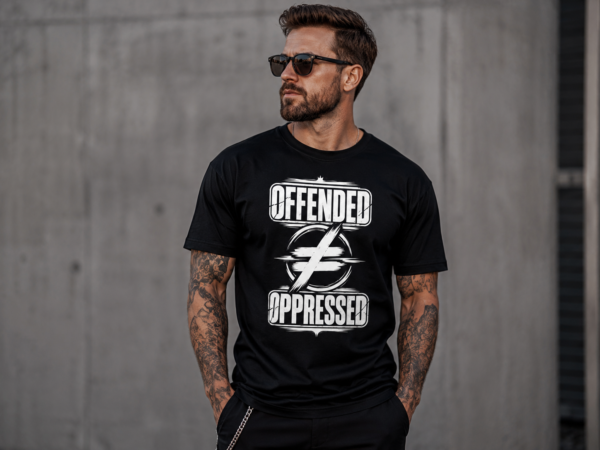
Working-Class Speech Is Treated as a Defect
People outside professional institutions may use direct, unfashionable or imperfect language. Woke culture often reads that difference as moral failure rather than a gap in dialect and social codes. The trick is subtle: a debatable claim is wrapped in the language of kindness until disagreement sounds cruel. But good intentions do not make an idea correct, and moral confidence is not a substitute for proof.
The movement claiming inclusion excludes people who cannot perform its manners. A polished graduate who knows every term can receive more charity than a decent worker who chooses the wrong one. It also rewards the least reasonable participant. The person most willing to claim offence gains a veto, while everyone capable of compromise is told to wait quietly. Predictably, more people learn to escalate.
Judge intent, conduct and argument before vocabulary. Plain speech may need correction, but linguistic status should not masquerade as virtue. Real tolerance requires restraint. It means resisting the urge to control every conversation and trusting adults to answer poor arguments with better ones rather than with institutional punishment.
Shared Economic Interests Are Broken Into Tribes
Workers facing the same employer, housing market or failing service can be encouraged to view one another primarily through competing identities. Common leverage dissolves into arguments about relative moral status. This is not a complaint about ordinary courtesy. It is a complaint about turning courtesy into doctrine, doctrine into policy and policy into a loyalty test. Each step makes honest correction harder.
Institutions face less united pressure to improve material conditions. People who could cooperate instead compete for symbolic recognition and blame one another for decisions made far above them. Bad incentives rarely stay contained. Once outrage earns attention and compliance, outrage becomes a career skill. The language becomes hotter even when the underlying problem becomes smaller.
Start with the shared practical objective and use universal improvements where possible. Better wages, safer streets and effective schools can benefit diverse people without requiring a grievance hierarchy. Respect works best when it is mutual. Ask people to behave decently, certainly, but do not demand declarations of belief as the price of employment, education or ordinary participation.
The Strongest Defence — and Why It Still Falls Short
Supporters reply that class-only politics historically overlooked forms of prejudice that affected people at every income. That warning is valid. Wealth does not erase every barrier, and universal programmes can be applied unfairly.
But recognising multiple causes should make analysis more concrete, not more ideological. If class is always mentioned and rarely allowed to change the verdict, intersectional language becomes decoration rather than understanding.
Five Reality Checks Worth Applying
Before accepting the fashionable answer on woke politics and class, strip away the moral branding and test the proposal as you would any other claim. These checks do not decide every argument automatically, but they force hidden assumptions and trade-offs into the open.
1. The consistency check: Would the rule still seem fair if political roles were reversed? Apply it to both “Elite Activism Reflects Elite Priorities” and “Working-Class Speech Is Treated as a Defect”. A principle that becomes unacceptable when an opponent controls it is probably a temporary weapon, not a standard anyone should trust.
2. The evidence check: What observable fact would show that the policy is working, and what result would show that it is failing? If supporters interpret every possible outcome as confirmation, the claim has escaped the world of evidence and entered the safer territory of faith.
3. The incentive check: Ask what behaviour the system rewards. Does it encourage honesty, competence and resolution, or does it make grievance, silence and ideological performance more valuable? People respond to incentives even when the programme describing those incentives uses compassionate language.
4. The proportion check: Compare the proven conduct with the proposed consequence. Woke disputes often jump from a disputed phrase to the language of danger, exclusion or permanent unfitness. Civilised judgment needs a scale; without one, every disagreement becomes an excuse for maximum pressure.
5. The completion check: What would success look like, and could the people running the policy ever admit that the job was finished? A reform that can only expand will eventually serve its administrators more reliably than the public. Worthy causes should be capable of winning.
The Common-Sense Alternative
Rejecting woke politics and class does not mean rejecting compassion, fairness or equal dignity. It means refusing to let good words excuse bad reasoning. A more durable approach begins with a few standards that work regardless of who currently holds cultural power.
- Measure real circumstance: Income, assets, schooling, health and postcode reveal practical opportunity.
- Respect ordinary language: Professional vocabulary is not proof of superior character.
- Open routes upward: Skills, apprenticeships and transparent recruitment matter more than slogans.
- Test who benefits: Elite representation should not be mistaken for broad social mobility.
- Build shared interests: Universal improvements can unite people whom identity politics divides.
None of these principles promises a world without offence or conflict. That is not a serious promise. They offer something better: rules that ordinary people can understand, institutions can apply consistently and opponents can challenge without fear.
Frequently Asked Questions
1. Does class explain every inequality?
No. Discrimination, disability, family structure, geography and many other factors matter. Class is essential precisely because woke discussion often treats it as secondary to identity categories.
2. Why do elite institutions prefer identity language?
It permits visible reform without necessarily changing economic hierarchy. Leadership can become more representative while the structure and privileges of leadership remain intact.
3. Can universal policies still discriminate?
Yes, through unequal access or enforcement. Universal principles need transparent implementation and evidence, not blind faith.
4. What would class-aware fairness prioritise?
Good schools, useful skills, stable work, affordable essentials, safe neighbourhoods and open recruitment — practical conditions that expand agency across demographic lines.
Fairness Must Reach Beyond the Professional Class
A politics that can identify every privilege except the privilege of money, credentials and institutional access will continue misunderstanding the people it claims to liberate.
Class does not cancel identity. It exposes the limits of a worldview that mistakes cultural influence for disadvantage and representation among elites for progress among everyone else. Common sense begins by looking at the life, not merely the label.
Rise & Defy exists for people who prefer honest arguments to approved scripts. If that sounds like you, explore the COMMON SENSE LOOKS GOOD ON YOU T-Shirt or browse the complete Rise & Defy collection. Wear what you mean. Think for yourself.