A Person Is More Than a Category
Identity politics begins with an observation that is plainly true: background can shape experience, and groups have not always been treated fairly. The trouble begins when that observation becomes a complete theory of human beings.
Once every person is sorted into a moral spreadsheet of privilege and disadvantage, individuality starts to look inconvenient. Your evidence matters less than your category. Your intentions are assigned before you speak. Your achievements and failures are interpreted through a script written for millions of strangers who happen to share one characteristic.
That approach does not unite people. It trains them to approach one another as representatives of rival blocs, each competing for recognition, resources and innocence. A politics that constantly counts differences should not be surprised when common purpose becomes harder to find.

Where the Argument Goes Wrong
Talking about patterns is sometimes necessary. Statistics, history and public policy often require group-level analysis. But a useful analytical category becomes a destructive social identity when it dictates how individuals must think and how others may judge them.
The alternative is not pretending that discrimination never happens. It is responding to specific unfairness while preserving the moral fact that every person remains an individual, responsible for their conduct and entitled to the same basic standard.
Individuals Are Flattened Into Group Stories
Identity politics treats broad demographic categories as if they contain one experience and one authorised opinion. People who disagree with the expected script are often dismissed as confused, disloyal or manipulated. There is nothing radical about asking whether a rule works. The radical move is insisting that the rule must be praised before its results can be examined. That reverses the proper order of public reasoning.
That erases the very diversity the movement claims to celebrate. Real people become useful only when their choices confirm a theory created by activists or institutions. The loudest campaigners may call that progress, but compliance is not conviction. A person forced to repeat a phrase has not been persuaded; they have merely been taught when to remain silent.
Let individuals describe their own priorities and beliefs. Group data can inform policy, but it should never overrule a person’s agency or serve as a substitute for listening. Real tolerance requires restraint. It means resisting the urge to control every conversation and trusting adults to answer poor arguments with better ones rather than with institutional punishment.
Politics Becomes a Zero-Sum Status Contest
When moral authority is allocated by identity, groups have an incentive to emphasise injury and guard their position. Another group’s progress can be interpreted as a loss of attention or legitimacy. An open society needs room for awkward questions, imperfect language and changed minds. When ideological etiquette removes that room, it does not create harmony. It creates a polished performance of agreement.
Coalitions become brittle because solidarity depends on a constantly negotiated hierarchy of grievances. Energy that could solve shared problems is spent arguing about who may speak first. Every exception makes the principle less believable. When standards change according to identity or politics, people stop seeing fairness and start seeing favouritism with better branding.
Build cooperation around concrete goals and equal rules. People with different histories can support safe streets, good schools and fair opportunity without agreeing on a ranking of identities. Respect works best when it is mutual. Ask people to behave decently, certainly, but do not demand declarations of belief as the price of employment, education or ordinary participation.
Class and Circumstance Disappear
A wealthy graduate and a struggling delivery driver may be placed in the same identity box despite having almost nothing in common economically. The category is treated as more important than present reality. Woke politics often advertises itself as an update to basic decency. The difficulty is that decency is universal, while ideological rules are frequently selective. They protect approved sensitivities and ignore inconvenient ones.
Policy then rewards symbolic representation among elites while overlooking people with fewer fashionable credentials or less cultural influence. The language sounds radical while the benefits remain comfortably professional-class. The immediate result is a quieter room and a worse decision. Sensible objections stay private, activists mistake silence for agreement, and a weak proposal survives because questioning it appears personally expensive.
Measure actual disadvantage where practical. Income, education, disability, neighbourhood and family circumstance often reveal need more accurately than a single identity label. A better test is simple: name the goal, show the evidence and apply the same rule to everybody. If an idea cannot survive those three steps, moral urgency does not rescue it; it only hides the weakness for longer.

Disagreement Is Treated as Betrayal
Identity politics often appoints unofficial spokespeople who claim to express what an entire group needs. Members who dissent threaten that authority and therefore receive unusually personal criticism. That distinction matters because a healthy culture can share a decent goal while arguing honestly about the method. Ideology skips that work. It declares one approved answer, then treats questions about evidence or consequences as proof of bad character.
People learn that belonging is conditional on political obedience. Communities lose internal debate, and outsiders receive a false impression of unanimous opinion. Over time, trust drains away. People learn that the stated rule is not the real rule; the real rule is to read the politics of the room and avoid becoming its next example.
Reject the idea that any person owns the voice of a category. Representatives may offer experience and argument, but nobody inherits political authority from demographic membership. The repair begins with viewpoint neutrality. Protect the right to speak for people you dislike, measure everyone by the same standard and let evidence outrank fashionable vocabulary.
Shared Citizenship Becomes an Afterthought
A stable society needs some identity larger than its subgroups: citizenship, neighbourhood, institution or common law. Identity politics treats those shared bonds with suspicion while intensifying narrower loyalties. Most people notice the problem long before institutions admit it. They hear the official slogan, compare it with ordinary experience and sense that something does not add up. The pressure to ignore that gap is where the trouble begins.
People become less willing to sacrifice for strangers because strangers are presented as members of competing interests. Trust declines and every public decision feels like one group defeating another. The cost lands on ordinary people first. Leaders can move on to the next slogan, but workers, customers, parents and pupils must live with the confusion that the slogan leaves behind.
Recover universal language. Equal rights, equal duties and common institutions do not erase difference; they provide the framework that lets difference exist without becoming permanent conflict. Where a genuine unfairness exists, address it directly and measure the result. Broad ideological rituals often flourish precisely because they are easier to announce than a specific problem is to solve.
The Strongest Defence — and Why It Still Falls Short
The strongest defence is that universal language once concealed real exclusion. That criticism has historical weight. A rule can claim to be neutral while being applied unfairly, and ignoring patterns can protect injustice.
The answer, however, is to make universal standards real — transparent criteria, open evidence and consistent enforcement — not to replace a broken impartiality with permanent group favouritism. Selective justice does not become fair because the preferred categories have changed.
Five Reality Checks Worth Applying
Before accepting the fashionable answer on identity politics, strip away the moral branding and test the proposal as you would any other claim. These checks do not decide every argument automatically, but they force hidden assumptions and trade-offs into the open.
1. The consistency check: Would the rule still seem fair if political roles were reversed? Apply it to both “Individuals Are Flattened Into Group Stories” and “Disagreement Is Treated as Betrayal”. A principle that becomes unacceptable when an opponent controls it is probably a temporary weapon, not a standard anyone should trust.
2. The evidence check: What observable fact would show that the policy is working, and what result would show that it is failing? If supporters interpret every possible outcome as confirmation, the claim has escaped the world of evidence and entered the safer territory of faith.
3. The incentive check: Ask what behaviour the system rewards. Does it encourage honesty, competence and resolution, or does it make grievance, silence and ideological performance more valuable? People respond to incentives even when the programme describing those incentives uses compassionate language.
4. The proportion check: Compare the proven conduct with the proposed consequence. Woke disputes often jump from a disputed phrase to the language of danger, exclusion or permanent unfitness. Civilised judgment needs a scale; without one, every disagreement becomes an excuse for maximum pressure.
5. The completion check: What would success look like, and could the people running the policy ever admit that the job was finished? A reform that can only expand will eventually serve its administrators more reliably than the public. Worthy causes should be capable of winning.
The Common-Sense Alternative
Rejecting identity politics does not mean rejecting compassion, fairness or equal dignity. It means refusing to let good words excuse bad reasoning. A more durable approach begins with a few standards that work regardless of who currently holds cultural power.
- See the individual: Do not assign beliefs, guilt or authority from demographic membership.
- Target actual need: Direct help towards measurable disadvantage and specific barriers.
- Protect internal diversity: No group has one authentic political voice.
- Use universal rules: The same rights and responsibilities should govern allies and opponents.
- Build common purpose: Organise cooperation around shared practical goals rather than grievance rankings.
None of these principles promises a world without offence or conflict. That is not a serious promise. They offer something better: rules that ordinary people can understand, institutions can apply consistently and opponents can challenge without fear.
Frequently Asked Questions
1. Is discussing discrimination identity politics?
Not necessarily. Specific evidence of unfair treatment should be examined. Identity politics begins when group identity becomes the primary measure of truth, guilt, entitlement or moral authority.
2. Does colour-blind or identity-blind policy solve everything?
No slogan solves everything. Neutral rules require transparent enforcement and evidence. The point is to minimise arbitrary group preference, not to ignore proven discrimination.
3. Why is identity politics attractive?
It offers a simple map of heroes, victims and villains. That simplicity gives people status and certainty, but real individuals and social problems are rarely so tidy.
4. What creates stronger solidarity?
Shared duties, equal treatment and concrete goals. Cooperation lasts longer when people are partners in a task rather than representatives negotiating a hierarchy of grievance.
Unity Needs Something Universal
People carry histories, loyalties and characteristics that matter. They also possess minds, choices and responsibilities that cannot be read from a category. Any politics that forgets the second truth will eventually abuse the first.
The way out is not forced sameness. It is equal citizenship: a common standard strong enough to protect difference without turning difference into destiny. That is less fashionable than identity arithmetic and much more capable of holding a society together.
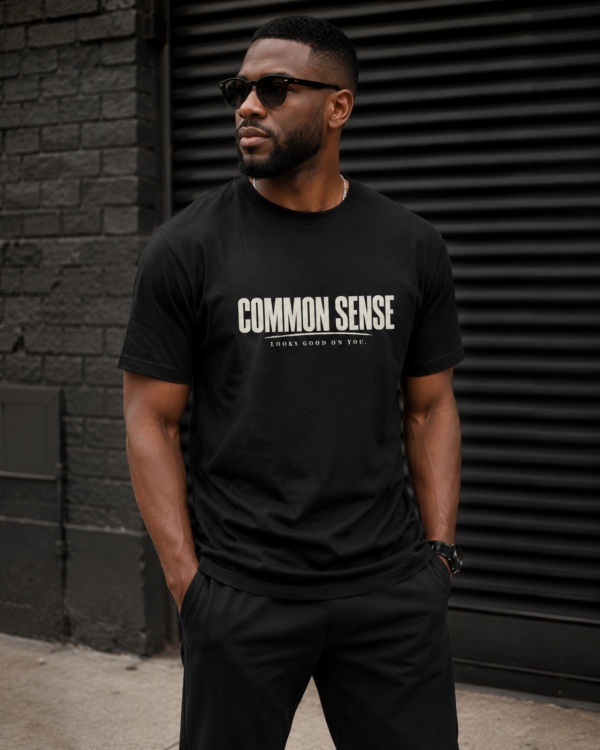
Rise & Defy exists for people who prefer honest arguments to approved scripts. If that sounds like you, explore the COMMON SENSE LOOKS GOOD ON YOU T-Shirt or browse the complete Rise & Defy collection. Wear what you mean. Think for yourself.